
Before joining Le Wagon, my role was in business development. Working with our product team,


Data Engineer, Data Analyst, Data Scientist: three of the most in-demand roles in tech in Canada right now. If you’re exploring a career in data, you’ve probably seen all three. Although the titles sound similar, the paths and the roles are very different.
In this article, we’ll provide a clear breakdown of what each one does, what skills they require, and how to figure out which path fits you.
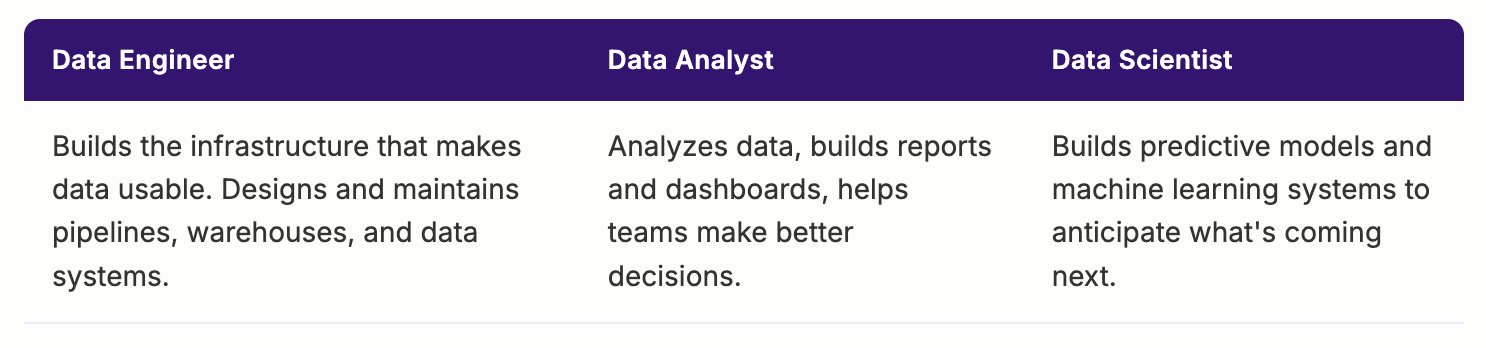
One way to think about it: the Data Engineer builds the road. The Data Analyst reads the map. The Data Scientist predicts where traffic is going.
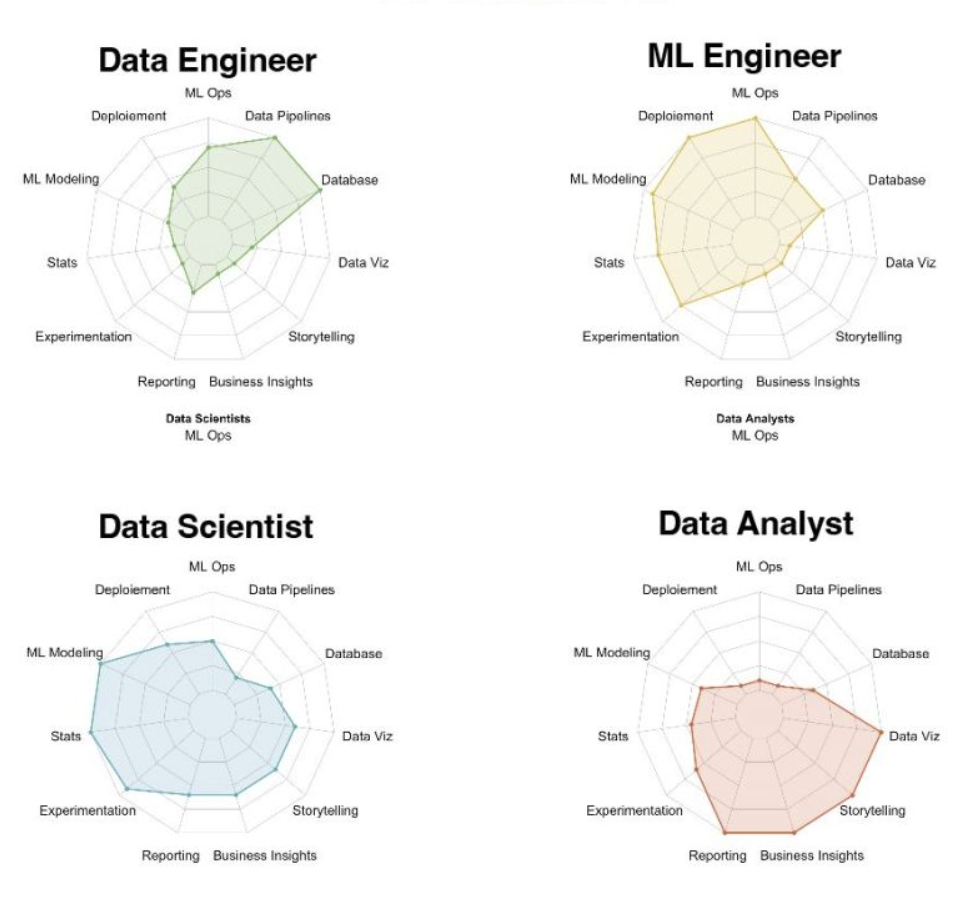
The three roles share a foundation (Python, SQL), but diverge quickly:
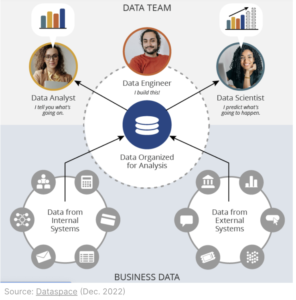
Data Engineers are the backbone of the data team. Without clean, reliable data flowing through the right systems, neither Analysts nor Scientists can do their job.
It’s not uncommon for Data Scientists to hand off a model to a Data Engineer for actual deployment.
Choose Data Analytics if you want to translate data into business decisions, work closely with non-technical teams, and communicate insights clearly. You don’t need a technical background to start.
Choose Data Science & AI if you’re drawn to predictive modeling, statistics, and machine learning. A solid foundation in math and programming is required, this is a technical path from day one.
Choose Data Engineering if you think like an engineer. You want to build systems, not just use them. You care about reliability, performance, and scale. Many Data Engineers come from a development or analytics background and want to go deeper into infrastructure.
A few questions that can help:
Do you want to answer business questions with data, or build the systems that make that possible? Are you more drawn to communication and visualization, or to architecture and infrastructure? Do you already have a programming background, or are you starting from scratch?
There’s no wrong answer. The three roles complement each other, and many people move between them over time. A Data Analyst sometimes transitions into Data Science. A Data Scientist sometimes shifts toward engineering. What matters is picking a clear entry point.
Data Analytics bootcamp (400h) — You’ll learn SQL, Python, dbt, and BI tools like Data Studio and Power BI. You’ll query databases, build data warehouses, create dashboards, and run analyses on real business datasets (sales funnels, retention, marketing campaigns). The program ends with a full data project built in a team from sourcing to presentation.
→ Download the Data Analytics syllabus
Data Science & AI bootcamp — You’ll work with Python, Pandas, Scikit-learn, and deep learning frameworks. You’ll build machine learning models, train them on real data, package them into APIs, and deploy them in the cloud. The final project is built in a team: you pitch an idea, build it, and present it publicly.
→ Download the Data Science & AI syllabus
Data Engineering bootcamp (200h) — You’ll learn to build pipelines end-to-end: Python, SQL, Docker, BigQuery, Airflow, Kafka. The program ends with a team project you design, build, and deploy.
→ Download the Data Engineering syllabus
Not sure which program fits your situation? Book a call with one of our learning advisors, they can walk you through the options and help you figure out the right next step.
Note: this article covers the three core data roles. The ecosystem also includes positions like ML Engineer, Analytics Engineer, and BI Engineer — roles that sit at the intersections. Worth exploring once you know which direction interests you.
Before joining Le Wagon, my role was in business development. Working with our product team,

Breaking into tech is rarely a straight line. For some, it starts with a university

Le Wagon Bootcamps equip those without prior coding knowledge with technical skills and the ability

AI is reshaping backend development by automating repetitive tasks, optimizing code quality, and accelerating workflows.

Follow Niklas’ inspiring journey through tech and AI, from his pivotal decision to join Le
